Return to Babylon
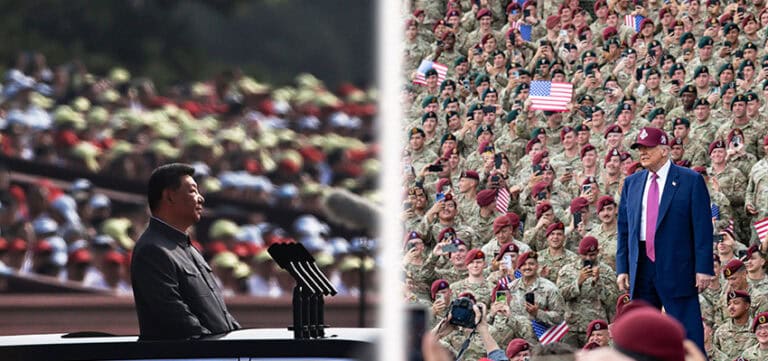
The world is under incredible strain. Great power conflict in war and trade, demographic concerns, migration, social issues, natural disasters, grappling with the reality and potential of AI as well as economic problems galore, just to list a few. These tensions ripple through society, often threatening to boil over into something truly heinous. Where does it all lead? Towards what do we seem to be incessantly rushing?
We would do well to pause and consider from time to time. As personal trials often lead us back to our faith and remind us of our reliance on God, so our collective struggles cause us to ask where God is in all of this turmoil. What part can so much strife and conflict have in His plan?
We turn to His Holy Scriptures when we need consolation and comfort, to be reminded of His enduring mercy or to be reinvigorated for the good work He has given us to do in this life. But is that all the Bible has to offer? We tend to forget that the Good Book also has a great deal to say about the past and the future; that it is an unrivaled repository of history and prophecy.
These scriptures are the ones that can help us make sense of what we see unfolding around us. As the gospels and the law can bring reform, reconciliation, peace and truth to our personal lives, so others can grant knowledge and understanding as we grapple with the big picture.
Most important to remember is that while Christ came preaching the good news about the soon coming Kingdom of God, He also imparted some very bad news about the events that would immediately precede it.
His disciples, marveling at the Temple, were shocked when He foretold its destruction. They pressed Him further for information. When was this going to happen? What signs would there be? How could they tell when the ultimate judgment would take place and the Kingdom of God be established? His answer included a great deal of calamity (Matthew 24, Luke 21).
“Then said he unto them, Nation shall rise against nation, and kingdom against kingdom: And great earthquakes shall be in divers places, and famines, and pestilences; and fearful sights and great signs shall there be from heaven” (Luke 21:10-11). This is what Matthew 24:8 calls the beginning of sorrows.
“And they shall fall by the edge of the sword, and shall be led away captive into all nations: and Jerusalem shall be trodden down of the Gentiles, until the times of the Gentiles be fulfilled. And there shall be signs in the sun, and in the moon, and in the stars; and upon the earth distress of nations, with perplexity; the sea and the waves roaring; Men’s hearts failing them for fear, and for looking after those things which are coming on the earth: for the powers of heaven shall be shaken” (Luke 21:24-26).
“For then shall be great tribulation, such as was not since the beginning of the world to this time, no, nor ever shall be. And except those days should be shortened, there should no flesh be saved: but for the elect’s sake those days shall be shortened” (Matthew 24:21-22).
Shocking, isn’t it? A time of calamity without equal in the pages of history. The worst ever. So bad that if God didn’t intervene, no human being would survive.
We are further informed that in the final days, the world will be dominated by an evil figure. He will be worshiped, “…and power was given him over all kindreds, and tongues, and nations” (Revelation 13:7). The empire he assembles will go on to control all commerce (Revelation 13:16-17).
Revelation 17 describes it as being empowered by a city that rules over kings (v18). This corrupt religious system is called, among many other unflattering things, Babylon (v5). That description recurs in the following chapter (verses 3 and 10) as its corruption and impending destruction are foretold. The comparison is meaningful and illuminating.
We first read of “Babel” being established by Nimrod in Genesis chapters 10 and 11. His name is often attributed to his encroachment on the territory allotted to Shem’s descendants in Genesis 10:11. It means “to have excess or a superabundance,” essentially a rebellion against God’s distribution of land. His self-aggrandizement, even if based on prowess or natural ability, is interesting in light of our topic.
What Nimrod began to do brought about God’s direct intervention and one of the most pivotal moments in the history of mankind. God was not going to allow all of humanity to be dominated by one man at that point in time. The separation of the languages effectively ensured that. Language became a barrier indeed, but sometimes barriers exist for our protection.
From our perspective in the 21st century, perhaps we can appreciate the wisdom of God’s intervention. Complete unification might bring benefits through cooperation, but when things go wrong no one is insulated from the effects. The same could be said of corruption. If there is a single target, where do the nefarious flock? And the potential damage wrought by a single despot working their way to the top is enormous, as the world will sadly discover.
Already, the vulnerabilities to the “global economy” are blindingly obvious. The disruption of traffic through Hormuz has been a notable one. Major intervention by the US to prop up the Japanese Yen (and thus avoid the fallout to the Dollar) is another illustration of how interconnected things are. Sanctions also expose this: Those against Russia have been significant, but they are nothing compared to the threat of expanded Iranian sanctions that hang over major banks and corporations in places like Turkey, India, and China. The truth is that any serious market shock or calamity ripples across the globe in this day and age.
Also, we can possibly appreciate a bit of what God meant when He said “…this they begin to do: and now nothing will be restrained from them, which they have imagined to do” (Genesis 11:6). Whether or not the tower they were building, “whose top may reach unto heaven,” was the stuff of science fiction or just a massive cooperative undertaking is debatable, but ultimately secondary. It is worth noting that the same phrase is used to describe cities in Canaan (Deuteronomy 1:28). What is remarkable is the scientific advancement that has taken place over recent decades as research has essentially transcended the language barrier.
None of the most revolutionary concepts are being pursued in isolation. Whether cooperatively or in competition, leaders in technologies like AI and nuclear fusion spur each other to greater efforts. What cannot be lost on us is that these these novel products, in addition to worldwide integration (and struggle for dominance), already open the door for the kind of nightmare scenario we read about in Bible prophecy.
It may be humorous to watch the bloopers from a Chinese robotics conference, but behind all of the falls and blunders is steady, frightening advancement. We might compare it to the baby steps of AI, fondly remembering all of the extra digits its early images contained. However, when it can replace your job it becomes another matter entirely. Historically, the industrial revolution left untold numbers destitute, despite paving the way for what we now consider normal. It can absolutely happen again, all while enabling the type of total surveillance, monitoring and control that is indicated in prophecy.
Mark Zuckerburg recently faced a rebellion among his employees over leaked plans to lay off up to 60% of their workforce and fill their roles with AI. Those plans were canceled, but how long will that tactic remain viable? Bill Gates has been traveling to meet with world leaders to share his concerns over the looming disruptions he expects to the global economy. He hopes governments will act to retain 40% of jobs for humans. And he means all jobs.
Elon also did a controversial interview with The Economist. He posits that combinations of new technologies will lead to a massive increase in productivity and output and thus result in deflation as supply outpaces demand. Still, his musings are apocalyptic in the sense that most people will be reduced to dependency on the powers that be. Albeit many would go willingly.
Much of the restraint to man’s imaginations has long since fallen away in things we take utterly for granted. Flight, electricity, the internal combustion engine; we have grown accustomed to the status quo despite how remarkable it would appear to someone from a different time. The changes and disruptions that are looming could take it to an altogether different level.
The geopolitical repercussions of any nation or bloc winning one of these pivotal technological races will be enormous as well. It could create a moment similar to the United States post WW2 –– which for a brief period was the only nation in possession of a nuclear weapon. And while the world is undeniably interconnected, it is not dominated by any particular power yet.
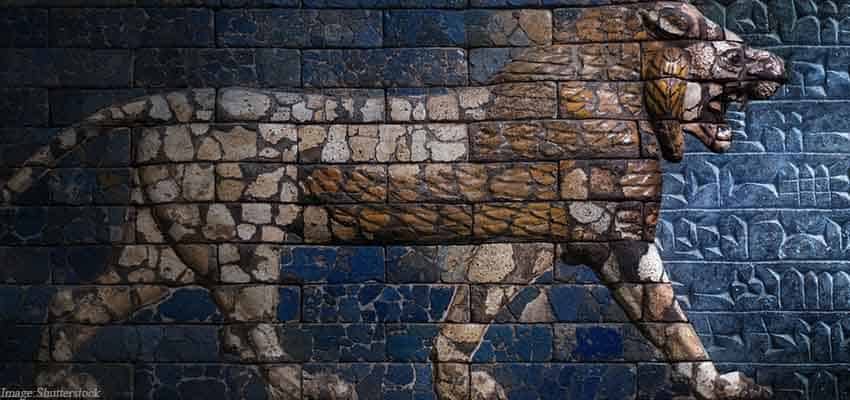
This returns us to the idea of Babylon. Historically, it grew into the first of the world-ruling empires mentioned in the book of Daniel, chapter 2. Importantly, the vision of King Nebuchadnezzar demonstrates unity, or the transference of dominion. It passes from Babylon at the day it was given through Persia, Greece and Rome down to the time of the end. This illustration shows that the final empire is a continuation of all those that have come before in certain aspects, but particularly a resurgence of Rome’s dominion at the time of Christ’s return.
Also relevant is the fact that ancient Babylon was used as an instrument of God’s punishment against Judah’s rebellion. In the end time, a type of Babylon will dominate a world that has also forgotten God. But as Babylon was superseded historically, so it will be prophetically. Isaiah 13 puts this in no uncertain terms and in clear end time language.
The current struggles may be burdensome and terrifying at times, but they are evidence that God is true. He has not ceased to warn those who will listen, imploring them to mend their ways and accept His mercy. He has preserved for us the past, and written for us what will be in the future. A vicious empire is going to emerge on the world scene.
We would do well to take hold of all that God has given and keep it as a comfort against the calamity to come. Peter wrote “…be mindful of the words which were spoken before by the holy prophets, and of the commandment of us the apostles of the Lord and Saviour: Knowing this first, that there shall come in the last days scoffers, walking after their own lusts, And saying, Where is the promise of his coming? for since the fathers fell asleep, all things continue as they were from the beginning of the creation” (2 Peter 3:2-4).
The world is not looking to God for solutions or the truth about where our current endeavors are heading. Instead it revels in its own destructive accomplishments. Peter goes on to remind us of God’s mercy, that the window for repentance is open for the time being, and that endurance will be required on the part of those who already believe. He reminds us of what God expects while time remains: peace, righteousness, and growth in grace and knowledge.
The return to Babylon is imminent. God is not going to wait forever, but He is working out His plan according to His own schedule. And no matter what comes, the larger issues can be settled and our lives secure with Jesus Christ. Until that day, we can continue in faith and confidence, praying earnestly, “Thy kingdom come.”